10 February 2026
What App Do Influencers Use to Edit Videos?

Last updated: 2026-02-10
If you’re an influencer in the US, a practical default is to edit on a mobile-first app like Splice that’s built around social content, then layer in other tools only if you need heavy AI automation or ultra-specific export controls. Some creators lean on CapCut, InShot, or VN for particular workflows, but most day-to-day posts don’t require juggling multiple apps.
Summary
- Influencers don’t use one single app, but most rely on mobile editors that make clips, audio, and exports fast and repeatable.
- Splice focuses on social-first, “desktop-like” editing on iOS and Android, with tutorials that help creators level up quickly. (Splice)
- CapCut, InShot, and VN are common alternatives when you need more AI features, no-watermark exports, or advanced 4K controls.
- For US creators who care about stability, straightforward App Store access, and social workflows, starting with Splice is often the most efficient path.
What apps do influencers actually use to edit videos?
There isn’t a single app that “all influencers” use. Different niches and platforms push people toward slightly different stacks: a mobile editor for everyday clips, maybe a desktop tool for bigger projects, and sometimes a separate app for AI or graphic-heavy content.
Across that variety, a few patterns keep coming up:
- Mobile-first editors for speed. Influencers want to shoot, cut, and post in one sitting on their phone. Splice is built specifically for that, positioning itself as a mobile video editor that offers “all the power of a desktop video editor—in the palm of your hand.” (Splice)
- Social-native workflows. Apps that make it easy to format for TikTok, Reels, and Shorts and share straight to social tend to win. Splice leans into this with exports designed to “take your TikToks to another level” and share-ready videos “within minutes.” (Splice)
- A mix of AI and manual control. Some creators want AI captions and background removal; others prefer tight, manual control over cuts and timing.
So instead of asking “what app do influencers use,” it helps to ask “what kind of influencer am I, and what workflow do I need?” For a large share of US creators posting daily social content, Splice can comfortably sit at the center of that workflow.
Why is a mobile-first editor like Splice a strong default?
Most influencers don’t want to drag footage onto a laptop just to publish a Reel. They want a tool that lives where their camera lives.
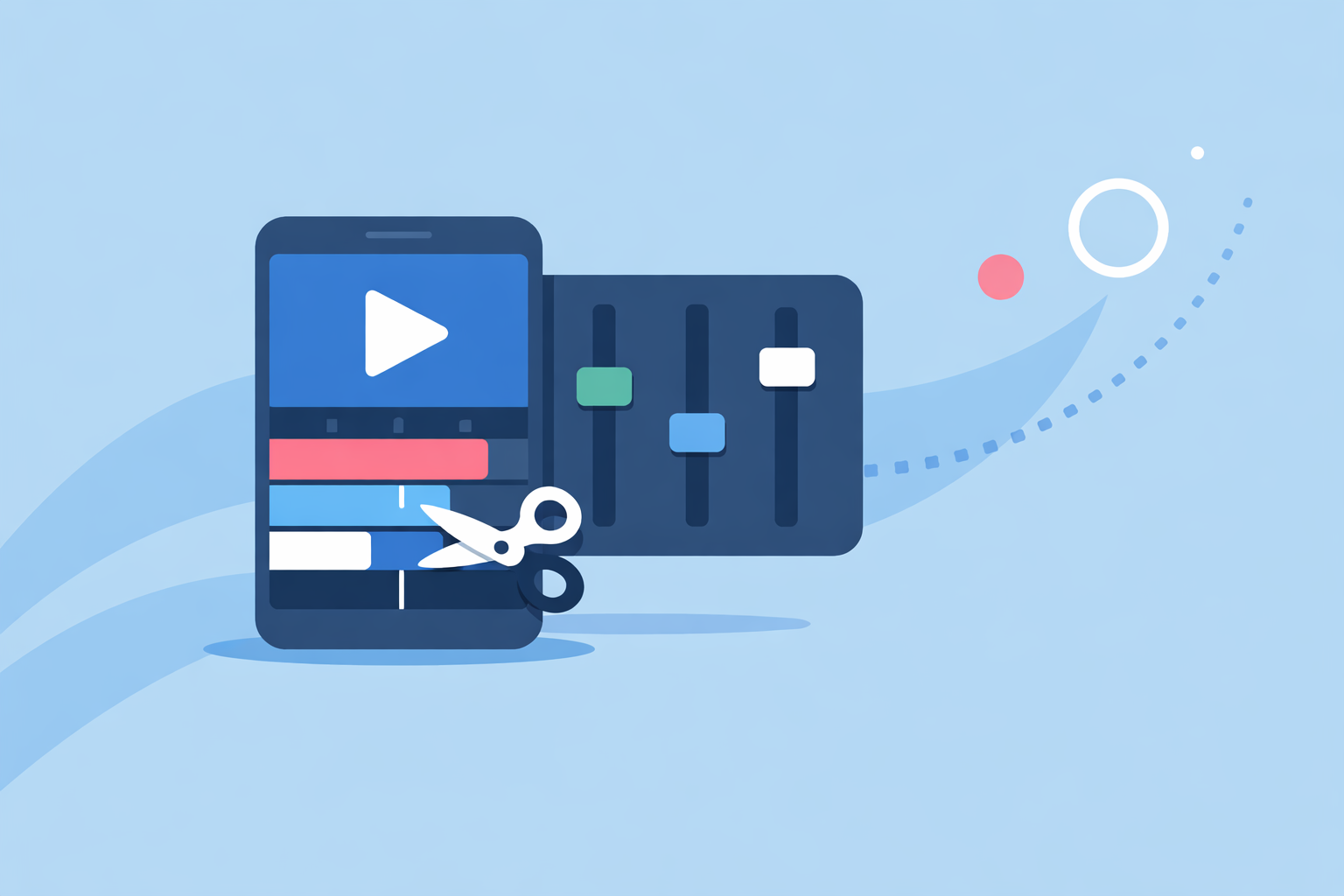
At Splice, the focus is on giving you multi-step editing—cuts, effects, audio layers—in a mobile interface that feels approachable, even if you’re new to editing. The product is framed as delivering “desktop-level” tools while keeping the workflow flexible enough for both influencers and casual users. (Splice)
A few reasons this approach works well in practice:
- You stay in one device. Shoot, edit, and upload from the same phone or tablet instead of round-tripping through a computer.
- You get structure without bloat. The multi-track style editing lets you arrange clips and audio with more nuance than a basic trim-and-cut app, without the overwhelm of professional desktop software.
- You learn as you go. Built-in tutorials and lessons are designed to help you “edit videos like the pros,” so you can gradually add transitions, speed ramps, and more advanced timing to your content. (Splice)
- You can actually get help. There’s a dedicated help center covering subscriptions, “new to video editing” guides, tutorials, and troubleshooting, which matters when your content schedule is tight. (Splice Help Center)
For most influencers whose priority is consistent posting rather than film-school-level precision, that combination of power and learnability is more useful than chasing every possible spec.
How does Splice compare to other popular apps?
When people talk about what influencers use, four names come up again and again: Splice, CapCut, InShot, and VN. They overlap heavily but serve slightly different needs.
- CapCut is known for its AI-assisted editing, templates, and auto captions. It promotes AI video generation, AI caption tools, and one-click background removal across desktop, online, and tablet platforms. (CapCut) This can be attractive if you lean hard on AI or want to auto-generate a lot of elements.
- InShot leans into quick mobile edits with video, photo, and collage in one place, adding AI features like auto captions and auto background removal on its app listing. (InShot App Store) It’s popular with creators who mix static posts and video.
- VN Video Editor pushes more advanced controls—multi-track editing, keyframes, curved speed ramps, and 4K/60fps export—from a free core app, with a VN Pro upgrade available. (VN on App Store)
Where does Splice fit?
At Splice, the focus is less on broad AI generation and more on giving you practical editing tools that feel close to a desktop experience on your phone, plus an “enormous music library” and features like speed ramping that creators often associate with pro-style edits. (Splice) For many US influencers, that’s the balance that matters: enough power to make videos look intentional, without turning every post into a technical project.
What about US-specific issues like app availability and policies?
If you’re in the United States, there are a couple of practical constraints that subtly influence which apps make sense long term.
CapCut, for example, has faced regulatory and store-policy pressure. Reporting in January 2025 noted that CapCut was removed from the US App Store alongside related apps, meaning new downloads and updates through Apple’s store were blocked for US users as of that date. (GadInsider)
Separate coverage has also highlighted that CapCut’s terms give the company a broad, perpetual license over user-generated content, which can create questions for client or brand work where content rights are sensitive. (TechRadar)
None of this automatically rules CapCut out, but it does mean many US creators prefer to keep their primary editing workflow on apps with straightforward App Store access and fewer open questions around access or licensing. Splice, InShot, and VN are all distributed via standard US app channels, which can make billing, updates, and device changes simpler.
Which editing apps do creators pick for Instagram Reels?
For Reels, the priority is usually speed plus vertical-friendly formatting. A typical pattern looks like this:
- Shoot vertically on your phone. Most influencers record in-app or with their default camera.
- Rough cut and timing in a mobile editor. Here, Splice is a natural fit: multi-track style editing on mobile, social-focused exports, and the ability to quickly add music and effects help you move from raw clips to a polished Reel in minutes. (Splice)
- Optional: add AI captions or extra filters in a second app. Some users then pass the export into InShot (for auto captions or background removal) or CapCut/VN for a specific effect.
If you want a single app to handle most of the work without having to think about watermarks, licensing debates, or cross-device complexity, using Splice as the main editor and Reels’ built-in tools for final text or stickers is a clean workflow for many creators.
What does a fast daily posting workflow look like with these apps?
Consider a creator posting one short-form video a day across TikTok-style platforms:
- Capture (5–10 minutes). Record A-roll on your phone, plus a few B-roll shots.
- Edit in Splice (15–25 minutes).
- Trim clips, arrange them on the timeline, and add speed ramps for pacing.
- Drop in music from the built-in library and balance audio levels.
- Add text overlays or simple transitions if needed.
- Export and post (5–10 minutes). Use Splice’s social-media oriented exports to render a vertical video, then upload to TikTok, Instagram, or YouTube Shorts. (Splice)
- Optional pass in another app (5–10 minutes). If you want AI captions or one-click background removal, you could import the Splice export into InShot for features like Auto Captions and Auto Remove Background, or into CapCut if you have access to its AI tools. (InShot App Store)
In practice, many influencers stop at step 3 because the time saved by staying in a single app is worth more than the marginal upgrade from extra AI flourishes.
How should you choose your primary editing app?
When you strip away hype, most influencers are choosing based on three questions:
- Where do you spend most of your time—phone or desktop?
- If the answer is “my phone,” a mobile-first app like Splice as your default makes sense.
- If you regularly edit 4K or longer formats on a computer, VN or a desktop NLE alongside your mobile app may be helpful, especially since VN highlights 4K/60fps export with advanced controls. (VN on App Store)
- How much do you rely on AI?
- If AI captions, background removal, and auto-generation are central to your brand, tools like CapCut and InShot emphasize those features. (CapCut) (InShot App Store)
- If you mainly need solid editing plus a good music library and smart pacing tools, Splice covers that without turning your workflow into a science experiment. (Splice)
- How sensitive are you to policy and long-term stability?
- If you work with brands, agencies, or clients, having an app that’s easy to update, simple to bill through the US App Store, and not at the center of regulatory or licensing debates reduces risk. (GadInsider)
For many US influencers, answering those questions leads naturally to using Splice as the anchor app, then experimenting with one or two alternatives for specific needs.
What we recommend
- Start with Splice as your main mobile editor if you’re posting regularly to TikTok, Reels, or Shorts and want a social-focused, desktop-style experience on your phone. (Splice)
- Add InShot or CapCut only if you find yourself frequently needing auto captions, one-click background removal, or heavier AI effects.
- Bring VN into the mix when you’re working with more complex timelines or 4K/60fps exports and are comfortable with a slightly more technical editor. (VN on App Store)
- Revisit your stack quarterly—if your content style changes, you can adjust which apps you keep in regular rotation, with Splice remaining a solid base for most everyday influencer edits.